
Quicksilver Messenger Service were a laid back twin lead guitar somewhat psychedelic folk-rock band from San Francisco in the late Sixties. Not a widely known band, they had modest commercial success having started later than their West Coast contemporaries, so were always a little behind. They do have a cult following. Folks who like them tend to focus on the early album, particularly the first two. The second album, a mostly live album, with Side One devoted to a long jam of Bo Diddley's "Who Do You Love", is widely regarded as their most interesting and best album. John Cippolina's guitar playing is praised by fans.
The band's leader, singer, writer, and guitarist Dino Valenti was arrested for drug possession before the band recorded their first album. After his release from prison he recorded a solo album, Dino (1968), under the name Dino Valente, and then re-joined Quicksilver Messenger Service in 1970. Those folks who particularly like the early albums tend not to like the more folky and melodic albums with Valenti. After two albums with Valenti, Cippolina left. Two more albums later, in 1972, the band broke up. All key members, including British keyboard player Nicky Hopkins who had played with the band from '69 to '70, recorded a "comeback" album in 1975, then broke up finally. The band's second guitarist, Gary Duncan, who had played on all albums bar one, renamed his own band Quicksilver in 1986 and released a string of mostly ignored albums. He may release more in the future. How much Quicksilver is related to Quicksilver Messenger Service is a matter of debate.
The band's leader, singer, writer, and guitarist Dino Valenti was arrested for drug possession before the band recorded their first album. After his release from prison he recorded a solo album, Dino (1968), under the name Dino Valente, and then re-joined Quicksilver Messenger Service in 1970. Those folks who particularly like the early albums tend not to like the more folky and melodic albums with Valenti. After two albums with Valenti, Cippolina left. Two more albums later, in 1972, the band broke up. All key members, including British keyboard player Nicky Hopkins who had played with the band from '69 to '70, recorded a "comeback" album in 1975, then broke up finally. The band's second guitarist, Gary Duncan, who had played on all albums bar one, renamed his own band Quicksilver in 1986 and released a string of mostly ignored albums. He may release more in the future. How much Quicksilver is related to Quicksilver Messenger Service is a matter of debate.
Wikipedia:
Quicksilver Messenger Service is an American psychedelic rock band formed in 1965 in San Francisco. The band achieved wide popularity in the San Francisco Bay Area and, through their recordings, with psychedelic rock enthusiasts around the globe, and several of their albums ranked in the Top 30 of the Billboard Pop charts. They were part of the new wave of album-oriented bands, achieving renown and popularity despite a lack of success with their singles (only one, "Fresh Air" charted, reaching No. 49 in 1970). Though not as commercially successful as contemporaries Jefferson Airplane and the Grateful Dead, Quicksilver was integral to the beginnings of their genre. With their jazz and classical influences and a strong folk background, the band attempted to create an individual, innovative sound. Music historian Colin Larkin wrote: "Of all the bands that came out of the San Francisco area during the late '60s, Quicksilver typified most of the style, attitude and sound of that era."
The band's members included John Cipollina, Gary Duncan, Greg Elmore, David Freiberg, Nicky Hopkins, and Dino Valenti. Valenti drew heavily on musical influences he picked up during the folk revival of his formative musical years. The style he developed from these sources is evident in Quicksilver Messenger Service's swing rhythms and twanging guitar sounds. After many years, the band has attempted to re-form despite the deaths of several members. In 2006, Duncan and Freiberg toured as the Quicksilver Messenger Service, using various backing musicians.
AllMusic:
The band that became Quicksilver Messenger Service originally was conceived as a rock vehicle for folk singer/songwriter Dino Valente (b. Nov. 7, 1943, d. Nov 16, 1994), author of "Get Together." Living in San Francisco, Valente had found guitarist John Cipollina (b. Aug. 24, 1943, d. May 29, 1989) and singer Jim Murray. Valente's friend David Freiberg (b. Aug. 24, 1938) joined on bass, and the group was completed by the addition of drummer Greg Elmore (b. Sep. 4, 1946) and guitarist Gary Duncan (b. Sep 4, 1946). As the band was being put together, Valente was imprisoned on a drug charge and he didn't rejoin Quicksilver until later.
The band that became Quicksilver Messenger Service originally was conceived as a rock vehicle for folk singer/songwriter Dino Valente (b. Nov. 7, 1943, d. Nov 16, 1994), author of "Get Together." Living in San Francisco, Valente had found guitarist John Cipollina (b. Aug. 24, 1943, d. May 29, 1989) and singer Jim Murray. Valente's friend David Freiberg (b. Aug. 24, 1938) joined on bass, and the group was completed by the addition of drummer Greg Elmore (b. Sep. 4, 1946) and guitarist Gary Duncan (b. Sep 4, 1946). As the band was being put together, Valente was imprisoned on a drug charge and he didn't rejoin Quicksilver until later.
Albums
.jpg)
Debut album. Some regard it as their best. Pop-folk songs mingle with more extended instrumental pieces that focus on interplay between lead electric guitars, which was something of a thing for Sixties West Coast bands. The music is pleasant with an airy California feel. Nothing really stands out, but it's an acceptable listen. "The Fool" is the standout track. Gliding silvery electric guitars in a trippy/folky extended piece. The Welsh band Man were clearly influenced by this. Yes. It's modestly lovely. I like it.
Side one
- "Pride of Man" – 4:08 (Hamilton Camp)
- "Light Your Windows" – 2:38 (Gary Duncan, David Freiberg)
- "Dino's Song"[7] – 3:08 (Dino Valenti)
- "Gold and Silver" – 6:43 (Gary Duncan, Steve Schuster)
Side two
- "It's Been Too Long" – 3:01 (Ron Polte)
- "The Fool" – 12:07 (Gary Duncan, David Freiberg)
- John Cipollina - lead guitar
- Gary Duncan - rhythm and lead guitar, vocals
- David Freiberg - bass guitar, vocals, viola
- Greg Elmore - drums
.jpg) |
| Happy Trails (Mar 1969) |
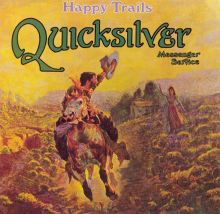
Live album with at least one track ("Cavalry") re-recorded in the studio. The side long riff around the Bo Diddly "Who Do You Love" song, doesn't quite work as well as it could. It's kinda limited, and perhaps reveals why these lads never made it into the big league, while their contemporaries such as the Grateful Dead and Jefferson Airplane, are household names, and even the minor league bands such as Big Brother and Moby Grape, are better known.
| No. | Title | Length |
|---|---|---|
| 1. | "Who Do You Love Suite"
| 25:22 |
| No. | Title | Writer(s) | Length |
|---|---|---|---|
| 2. | "Mona" | McDaniel | 6:53 |
| 3. | "Maiden of the Cancer Moon" | Duncan | 2:54 |
| 4. | "Calvary" | Duncan | 13:31 |
| 5. | "Happy Trails" | Dale Evans | 1:29 |
- John Cipollina – guitar, vocals
- Gary Duncan – guitar, vocals
- David Freiberg – bass, vocals, piano
- Greg Elmore – drums, vocals, piano, percussion
AllMusic: 10
Score: 4
Score: 4
 |
| Shady Grove (Dec 1969) |
A more melodic (pop?) and appealing approach, with the added attraction of the sublime (if a little over used, a la Rick Wakeman) Nicky Hopkins on piano, makes this a lighter, more accessible, and more enjoyable album than the previous one. I suspect those who like Happy Trails are less likely to also like this one as much. I like it, and by the end I love it. Nicky Hopkins's psychedelic boogie, the 9 minute instrumental "Mad Shirt Grinder", is great fun, and refreshes the palate after the Grateful Dead-esque country dirge of "Words Can't Say". A somewhat mixed album, looking both forwards and backwards, though on the whole mostly quite entertaining and satisfying.
| No. | Title | Writer(s) | Length |
|---|---|---|---|
| 1. | "Shady Grove" | P.O. Wands | 2:59 |
| 2. | "Flute Song" | Denise (Kaufman) Jewkes | 5:17 |
| 3. | "Three or Four Feet from Home" | John Cipollina | 2:58 |
| 4. | "Too Far" | David Freiberg | 4:23 |
| 5. | "Holy Moly" | Nick Gravenites | 4:20 |
| No. | Title | Writer(s) | Length |
|---|---|---|---|
| 6. | "Joseph's Coat" | Cipollina, Gravenites | 4:36 |
| 7. | "Flashing Lonesome" | Freiberg, Gravenites | 5:21 |
| 8. | "Words Can't Say" | Freiberg, Jewkes | 3:17 |
| 9. | "Edward, the Mad Shirt Grinder" | Nicky Hopkins | 9:10 |
- John Cipollina – guitar, vocals
- Nicky Hopkins – piano, organ, celeste, harpsichord, cello
- David Freiberg – bass, vocals, guitar, viola
- Greg Elmore – drums, percussion
 |
| Just for Love (Aug 1970) |
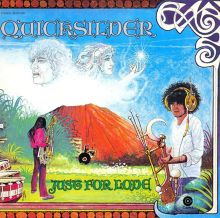
Varied. Lively. Entertaining. The band's founding singer, Dino Valenti, who had been imprisoned for possession of marihuana so was not with them for the first three albums, now re-joined, and wrote all but one of the album's tracks. He has a somewhat reedy voice - fairly distinctive. The songs are mostly in a laid back Californian folk-rock style. An attractive, characterful, gentle album. It was a modest success. It is generally disliked by fans of the early Quicksilver.
HeadHeritage review.
HeadHeritage review.
All songs written by Jesse Oris Farrow (Dino Valenti), except where noted.
- Side one
- "Wolf Run (Part 1)" – 1:12
- "Just for Love (Part 1)" – 3:00
- "Cobra" (John Cipollina) – 4:23
- "The Hat" – 10:36
- Side two
- "Freeway Flyer" – 3:49
- "Gone Again" – 7:17
- "Fresh Air" – 5:21
- "Just for Love (Part 2)" – 1:38
- "Wolf Run (Part 2)" – 2:10
- Dino Valenti – guitar, lead vocals, flute, conga
- Gary Duncan – guitar, backing vocals, bass, maracas, wood block
- John Cipollina – steel, slide and electric guitars, backing vocals
- David Freiberg – bass, backing vocals, guitar
- Greg Elmore – drums, percussion
- Nicky Hopkins – piano
 |
| What About Me (Dec 1970) |
Smooth, soulful, funky, laid back, and very attractive. The Dino Valenti version of QMS is different to the early version - it's more melodic, more focused, more professional, and perhaps more accessible and poppy, but the musicians have not lost any of their skills. This is a band moving away from the indulgence that led to the 25 minute yet very limited Bo Diddly jam, into something more controlled and engaging. I like this. Perhaps a little more than the previous album, though its in the same garden summerhouse.
Side one
- "What About Me" (Farrow - Dino Valenti) – 6:43
- "Local Color" (John Cipollina) – 3:00
- "Baby Baby" (Farrow) – 4:44
- "Won't Kill Me" (David Freiberg) – 2:32
- "Long Haired Lady" (Farrow) – 5:55
Side two
- "Subway" (Gary Duncan, Farrow)[4] – 4:29
- "Spindrifter" (Nicky Hopkins) – 4:38
- "Good Old Rock and Roll" (Farrow) – 2:30
- "All in My Mind" (Duncan, Farrow) – 3:48
- "Call on Me" (Farrow) – 7:36
- Dino Valenti – lead vocals (except on "Won't Kill Me"), guitar, percussion
- Gary Duncan – guitar, backing vocals, bass, percussion, organ
- John Cipollina – guitar, percussion
- David Freiberg – bass, backing vocals, lead vocal on "Won't Kill Me", guitar
- Greg Elmore – drums, percussion
- Nicky Hopkins – piano (except on "What About Me", "Baby Baby", "Subway", and "Call on Me")
- Mark Naftalin – piano on "What About Me", "Baby Baby", and "Call on M
 |
| Quicksilver (1971) |
Some of the light and magic has gone from the band. This feels quite ordinary and mundane compared to the previous two Dino Valenti albums. The songs are not as much fun, the band feels like its just going through the motions (and key members Cipollina and Hopkins have left), and Valenti sounds less confident. It feels dated for 1971. It's the album I've least enjoyed or respected for far, yet others seems to like it.
All songs written by Dino Valenti except where indicated.
- Side one
- "Hope" – 3:01
- "I Found Love" (Gary Duncan) – 3:56
- "Song for Frisco" – 4:58
- "Play My Guitar" – 4:38
- "Rebel" (traditional, arranged by Dino Valenti) – 2:02
- Side two
- "Fire Brothers" (Duncan) – 3:12
- "Out of My Mind" – 4:34
- "Don't Cry My Lady Love" – 5:13
- "The Truth" – 6:58
- Dino Valenti – guitar, vocals, flute, percussion
- Gary Duncan – guitar, vocals
- Mark Naftalin – organ, piano
- Mark Ryan – bass
- Greg Elmore – drums, percussion
 |
| Comin' Thru (1972) |
- Side one
- "Doin' Time in the U.S.A." (Gary Duncan) – 4:15
- "Chicken" (Traditional, arranged by Dino Valenti) – 4:03
- "Changes" (Valenti) – 4:15
- "California State Correctional Facility Blues" (Valenti, Duncan, Greg Elmore, Chuck Steaks) – 6:10
- Side two
- "Forty Days" (Valenti, Duncan, Elmore) – 5:31
- "Mojo" (Valenti) – 5:34
- "Don't Lose It" (Duncan, Valenti) – 5:57
- Dino Valenti – vocals, guitar, congas
- Gary Duncan – guitar, vocals
- Chuck Steaks – organ
- Mark Ryan – bass
- Greg Elmore – drums
 |
| Solid Silver (1975) |
The reunion album. This is pleasant, though feels more like a compilation album of early Seventies West Coast music than an album by one band. There's some Eagles, Grateful Dead, Jefferson Airplane, and themselves in here. It's OK. Quite professional and attractive, but it carries little weight, and is not really distinctive enough to stay in the memory, even though all the key members of the band are playing here together.
- Side one
- "Gypsy Lights" (Gary Duncan) – 3:40
- "Heebie Jeebies" (John Cipollina) – 4:15
- "Cowboy on the Run" (Dino Valenti) – 3:13
- "I Heard You Singing" (David Freiberg, Robert Hunter) – 3:48
- "Worryin' Shoes" (Valenti) – 3:25
- Side two
- "The Letter" (Valenti) – 4:06
- "They Don't Know" (Duncan) – 3:54
- "Flames" (Cipollina, Valenti) – 4:20
- "Witches' Moon" (Valenti) – 2:59
- "Bittersweet Love" (Valenti, Duncan) – 4:23
- Gary Duncan – electric and pedal steel guitars, vocals
- John Cipollina – electric and Hawaiian steel guitars, vocals
- Dino Valenti – guitar, vocals
- David Freiberg – bass, vocals
- Greg Elmore – drums
Gary Duncan revived the band as Quicksilver in 1986 using his own band. No other original members were involved.
Discography
Quicksilver Messenger Service (1968)
Shady Grove (1969)
Just for Love (1970)
What About Me (1970)
Quicksilver (1971)
Comin' Thru (1972)
Solid Silver (1975)
Best album list
* BestEverAlbums
Happy Trails (1969)
Quicksilver Messenger Service (1968)
Quicksilver (1971)
That's the only list I've found..


_cover.jpg)


